
Introduction
Selecting the right butterfly valve is more than just choosing the correct size or material. One of the most common questions engineers, plant managers, and procurement teams ask is whether a wafer type or lug type butterfly valve is the better option.
Both valve designs perform the same basic function—regulating or isolating fluid flow—but their installation methods, maintenance capabilities, and applications differ significantly.
In this guide, we’ll compare wafer vs lug butterfly valve designs, explain where each performs best, and help you choose the right option for your industrial application.
What Is a Butterfly Valve?
A butterfly valve is a quarter-turn valve used to start, stop, or regulate fluid flow. It operates using a circular disc mounted on a rotating shaft. When the handle or actuator turns 90 degrees, the disc either opens fully to allow flow or closes tightly to stop it.
Butterfly valves are widely used because they are compact, lightweight, cost-effective, and suitable for handling water, chemicals, oil, gas, HVAC systems, and many industrial fluids.
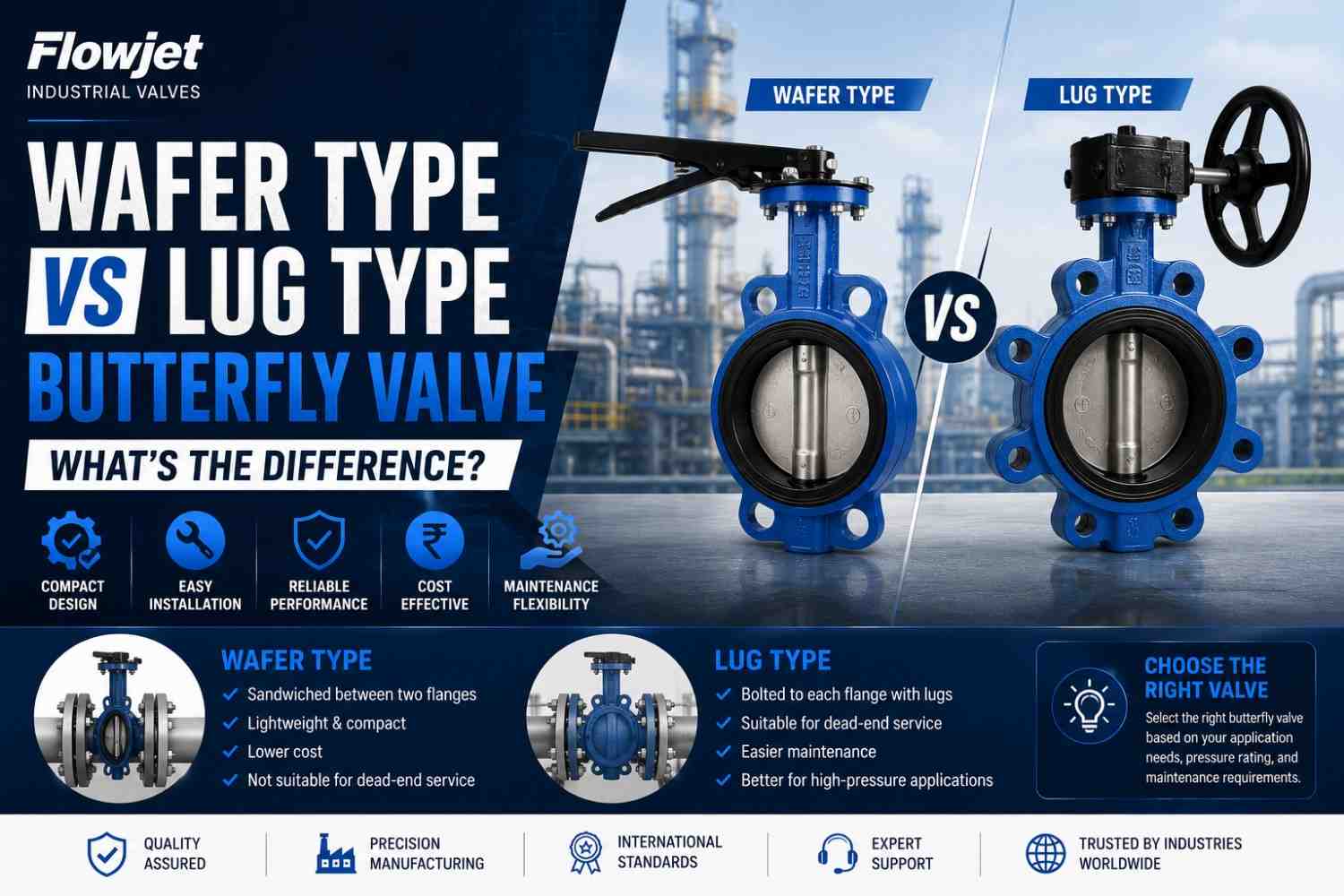
What Is a Wafer Type Butterfly Valve?
A wafer type butterfly valve is designed to fit snugly between two pipeline flanges. Long flange bolts pass through both flanges and hold the valve securely in place.
Its primary purpose is to prevent backflow in systems where space is limited and lightweight equipment is preferred.
Key Features
- Compact and lightweight construction
- Installed between two flanges
- Economical compared to lug type valves
- Suitable for bidirectional flow
- Ideal for general isolation and flow control
Common Applications
- Water treatment plants
- HVAC systems
- Fire protection pipelines
- Chemical processing
- Food and beverage industries
What Is a Lug Type Butterfly Valve?
A lug type butterfly valve has threaded inserts (lugs) around its body. Each flange is bolted directly to the valve rather than using bolts that pass through both flanges.
This design allows one side of the pipeline to be disconnected while the opposite side remains pressurized, making maintenance much easier.
Key Features
- Threaded lug body design
- Supports dead-end service
- Easier maintenance and replacement
- Strong mechanical connection
- Suitable for higher-pressure applications
Common Applications
- Oil and gas plants
- Power generation
- Petrochemical industries
- Industrial process lines
- Marine applications
Wafer vs Lug Butterfly Valve: Key Differences
| Feature | Wafer Type | Lug Type |
| Installation | Sandwiched between flanges | Bolted individually to each flange |
| Cost | Lower | Higher |
| Weight | Lightweight | Heavier |
| Maintenance | Entire pipeline usually disconnected | One side can be removed independently |
| Dead-End Service | Generally not recommended | Suitable |
| Strength | Standard duty | Heavy-duty applications |
| Pressure Handling | Moderate | Higher pressure systems |
| Best For | General industrial use | Critical industrial processes |
Advantages of Wafer Type Butterfly Valves
Wafer valves remain one of the most popular industrial valve designs because they provide excellent performance while keeping installation costs low.
Their major benefits include:
- Lower purchase cost
- Compact installation
- Reduced pipeline weight
- Faster installation
- Easy automation
- Minimal maintenance
For standard flow control applications, wafer valves often provide the most economical solution.
Advantages of Lug Type Butterfly Valves
Lug butterfly valves are preferred where maintenance flexibility and reliability are essential.
Major advantages include:
- Pipeline isolation during maintenance
- Strong flange connection
- Better mechanical stability
- Suitable for dead-end service
- Longer service life in demanding conditions
Although they cost more, lug valves can reduce maintenance downtime significantly.
Which Butterfly Valve Should You Choose?
The right choice depends on your operating conditions.
Choose a wafer type butterfly valve if:
- Budget is important
- The system operates under moderate pressure
- Space is limited
- Frequent maintenance is not expected
Choose a lug type butterfly valve if:
- One pipeline section must remain operational during maintenance
- Higher pressure ratings are required
- System reliability is critical
- Dead-end service is needed
Industries That Use Both Valve Types
Both wafer and lug butterfly valves are widely used across many industries, including:
- Water treatment
- Chemical processing
- Pharmaceutical manufacturing
- Food processing
- Oil & Gas
- Power plants
- HVAC systems
- Marine engineering
- Paper mills
- Mining operations
How to Choose the Right Butterfly Valve Manufacturer
Beyond selecting the valve type, choosing a reliable butterfly valve manufacturer is equally important.
Look for manufacturers that offer:
- ISO-certified manufacturing
- High-quality casting materials
- API-compliant production
- In-house pressure testing
- Multiple body and seat material options
- Technical support
- Fast delivery
- Custom engineering solutions
Working with an experienced butterfly valve manufacturer ensures better product quality, longer service life, and dependable after-sales support.
Frequently Asked Questions
Which is better, wafer or lug butterfly valve?
Neither is universally better. Wafer valves are ideal for cost-effective installations, while lug valves are better for maintenance-intensive and high-pressure applications.
Can a wafer butterfly valve be used for dead-end service?
In most cases, no. Lug type butterfly valves are specifically designed for dead-end service.
Are lug butterfly valves more expensive?
Yes. Their stronger construction and threaded lug design make them more expensive than wafer valves.
Which valve is easier to maintain?
Lug butterfly valves allow one side of the pipeline to be removed without shutting down the entire system, making maintenance much easier.
Conclusion
Understanding the differences between wafer vs lug butterfly valve designs helps engineers and buyers make better purchasing decisions.
Wafer butterfly valves offer a compact and economical solution for standard industrial applications, while lug butterfly valves provide greater installation flexibility, easier maintenance, and improved performance in demanding environments.
Before placing an order, evaluate your system pressure, maintenance requirements, installation conditions, and long-term operating costs. Selecting the right butterfly valve today can improve efficiency, reduce downtime, and extend the life of your piping system.